quattro
Legendary all-wheel drive.
quattro
Legendary all-wheel drive.
The heart and soul of Audi
A dream realized
It began with a question no one had thought to ask
.jpg?width=576)
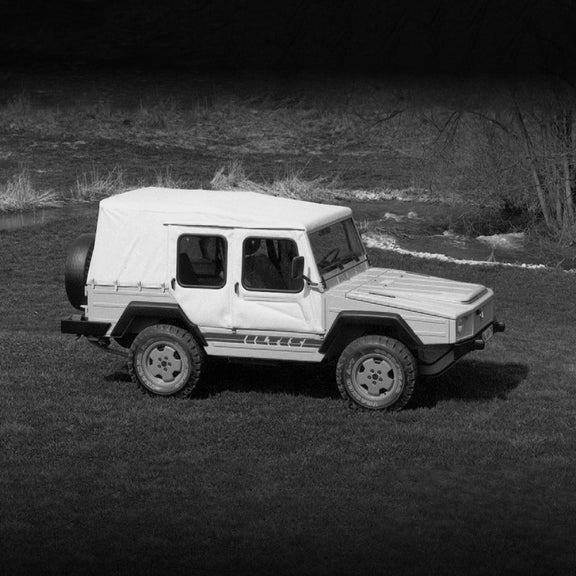


When the Audi quattro debuted at the 1980 Geneva Motor Show, it introduced a new idea: all-wheel drive could be about more than overcoming difficult terrain. Its combination of traction, performance and control quickly proved itself faster and safer. quattro had become more than an engineering achievement. It was the beginning of an Audi legend.
It's hard to believe quattro's lineage started with vehicles like this. For decades, all-wheel drive was primarily associated with off-road vehicles, where maximum traction meant conquering mud, snow and difficult terrain. Audi engineers saw an opportunity to bring that capability to the road.
It seemed like an impossible task, and there were many who had doubts. Always up for a challenge, Audi engineers set about capturing the power and flexibility of all-wheel drive and bringing its essence to the road. Through rigorous testing and design, greatness was achieved and quattro was born.
Audi developed an innovative permanent all-wheel-drive system around a hollow transmission shaft, allowing power to reach both axles without the weight and complexity of traditional four-wheel-drive systems. The result was a drivetrain that combined traction with the performance and handling of a road car that would go on to dominate the world of race for decades to come.
When the Audi quattro debuted at the 1980 Geneva Motor Show, it introduced a new idea: all-wheel drive could be about more than overcoming difficult terrain. Its combination of traction, performance and control quickly proved itself faster and safer. quattro had become more than an engineering achievement. It was the beginning of an Audi legend.
It's hard to believe quattro's lineage started with vehicles like this. For decades, all-wheel drive was primarily associated with off-road vehicles, where maximum traction meant conquering mud, snow and difficult terrain. Audi engineers saw an opportunity to bring that capability to the road.
See quattro's beating heart

The turns we took
 2026 – Audi Nuvolari
With quattro predictive ride, Audi took quattro from reacting to changing conditions toward anticipating them. The system uses a highly precise model of the vehicle's current state to predict potential changes in traction. The result is a new interpretation of quattro: rather than simply responding to a loss of grip, the system works proactively to keep the vehicle balanced, controlled and ready for what comes next.
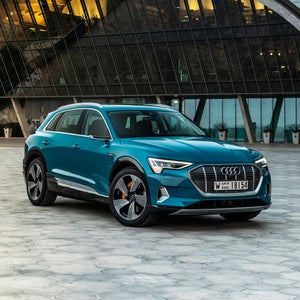 2019 – Audi e-tron
The e-tron marked a new chapter for quattro, replacing mechanical connections between the axles with electric motors and electronic control. The system could adjust torque between the axles in milliseconds, while later models such as the e-tron S expanded quattro with electric torque vectoring.
European model shown. Specifications may vary.
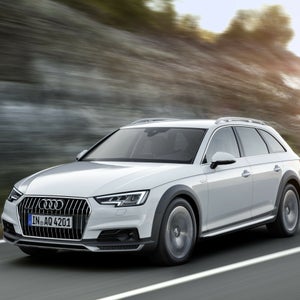 2017 – Audi A4 allroad
Audi introduced quattro with ultra in the A4 allroad, combining all-wheel-drive capability with greater efficiency. The system could disconnect the rear axle when additional traction was unnecessary and reconnect it predictively when conditions called for all-wheel drive.
European model shown. Specifications may vary.
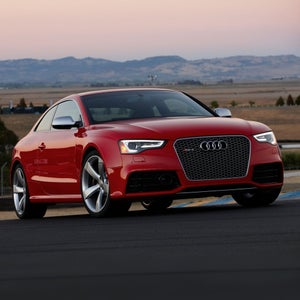 2010 — RS 5 Coupe
Audi introduced its innovative crown-gear differential with the RS 5 Coupe. Unlike a traditional center differential, its unique crown-gear design is lighter and can allow a torque distribution of up to 70% to the front wheels and 85% to the rear wheels. When traction changes, the self-locking system automatically shifts torque to the axle with more grip, helping keep the car planted and composed.
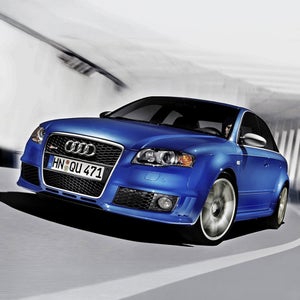 2005 – Audi RS 4
The second-generation RS 4 introduced an asymmetric quattro system with a 40:60 front-to-rear torque split. By sending more torque to the rear axle under normal conditions, Audi gave quattro a more dynamic, rear-biased character while retaining its ability to respond to changing traction.
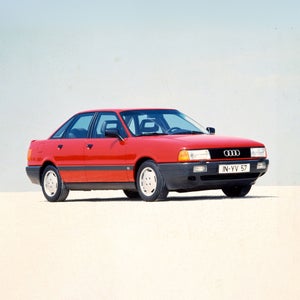 1986 – Audi 80 quattro
The mechanical-locking center differential was replaced with a Torsen (torque-sensing) system, allowing for automatic 50:50 torque distribution between front and rear axles, making for a smoother handling experience.
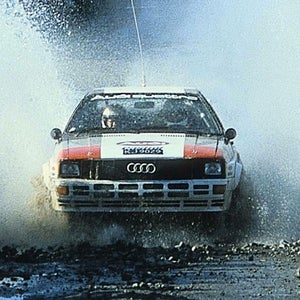 1981 – Jänner Rallye
The Audi Quattro would win its debut race, and the quattro drivetrain would go on to revolutionize racing through superior handling in many conditions.
 1980 – Audi Quattro
Audi introduced quattro with the original Audi Quattro, bringing lightweight permanent all-wheel drive to a high-performance passenger car. Its innovative hollow-shaft design helped make all-wheel drive more compact and practical, establishing quattro as a defining Audi technology.
Often imitated, never duplicated
- Agility meets power
A variable torque split between the front and rear wheels delivers power where and when it's needed most, granting more traction to the axle with the most grip for a surefooted feeling in almost any condition.
- Confidence shifts in your favor
Torque vectoring works by braking the inside wheel in corners, proactively transferring torque to the outside wheel which helps turn the car and improve handling performance.
- Own every corner
The available rear sport differential’s multi-clutch pack system sends power to the outside rear wheel when turning, allowing the rear wheel to rotate faster for improved cornering performance.
Has saltado el carrusel, continúa con el contenido principal
Built for any challenge

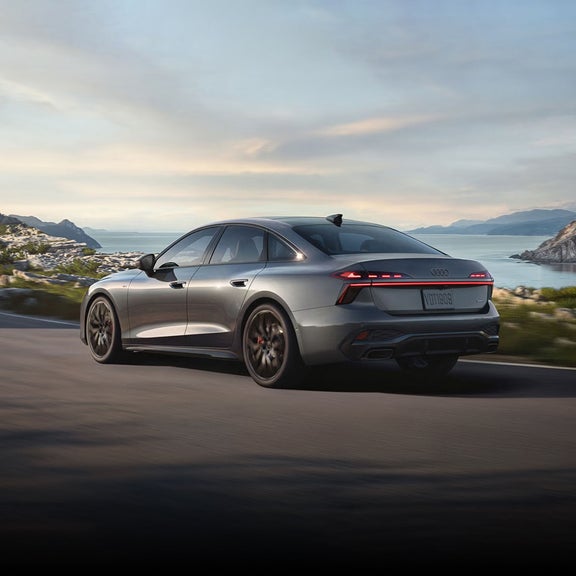
quattro was engineered around a simple idea: confidence shouldn't depend on the conditions. From dry pavement and winding roads to rain, snow and loose terrain, quattro continually works to put power where it can provide the best performance, helping you move forward with confidence wherever the road takes you.
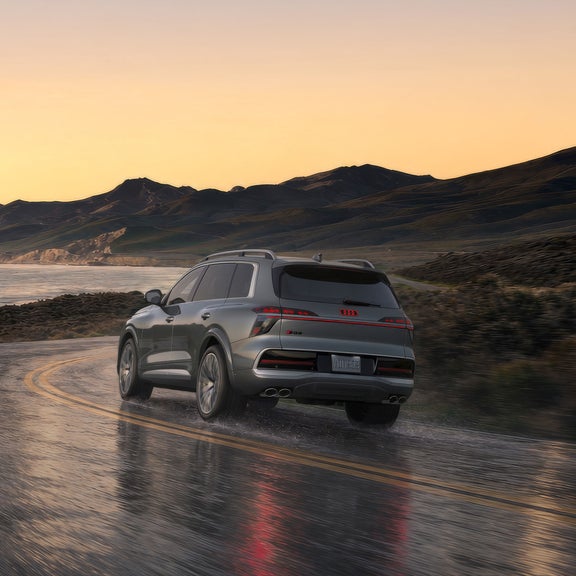
On dry roads, quattro turns available traction into confident performance. Power is distributed across all four wheels to help deliver strong acceleration, precise handling and the freedom to enjoy every curve with confidence.
When rain transforms the road, quattro helps keep confidence firmly in the driver's hands. By dynamically distributing torque between the axles, it helps maintain traction and stability, so changing conditions don't have to change your drive.
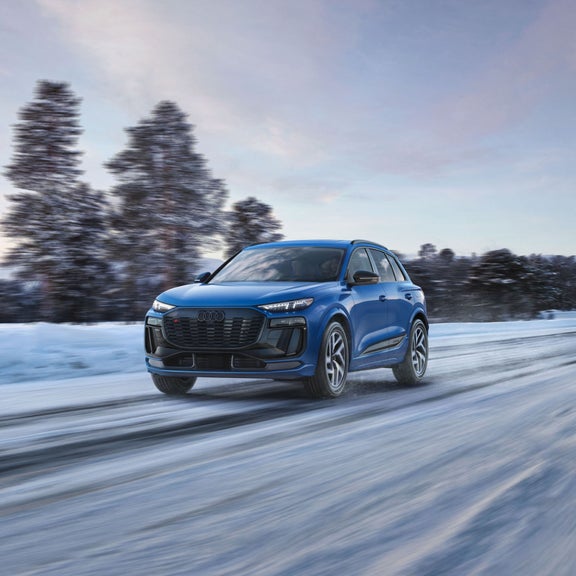
When winter challenges the road beneath you, quattro is ready to respond. By directing torque toward where it can find the most grip, the system helps maintain traction and composure, giving you confidence to keep moving when others may hesitate.
When driving during cold, snowy or icy weather conditions, ensure that your vehicle is equipped with appropriate all-season or winter weather tires. Even with appropriate tires, you must always drive in a manner appropriate for the weather, visibility and road conditions.
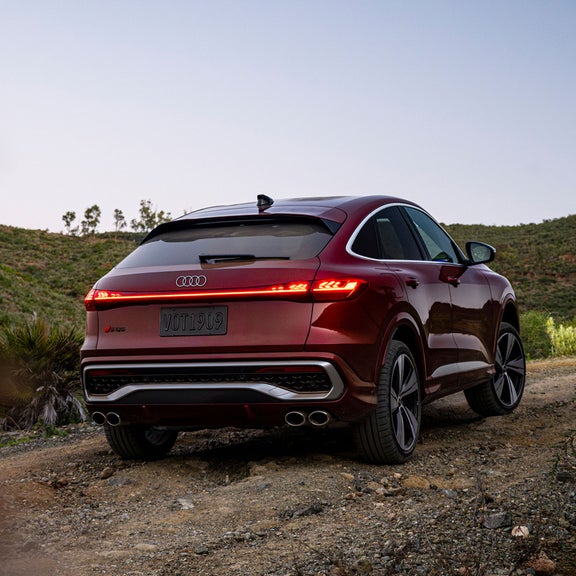
Beyond the pavement, quattro brings the same confidence to roads less travelled. By distributing torque across all four wheels, it helps make the most of available grip on gravel and loose surfaces, giving you greater control wherever the road leads.
Only drive and park where it is permitted and always stay on provided roads and paths. See owner’s manual for important information regarding off-pavement use. European model shown. Specifications may vary.
quattro was engineered around a simple idea: confidence shouldn't depend on the conditions. From dry pavement and winding roads to rain, snow and loose terrain, quattro continually works to put power where it can provide the best performance, helping you move forward with confidence wherever the road takes you.
On dry roads, quattro turns available traction into confident performance. Power is distributed across all four wheels to help deliver strong acceleration, precise handling and the freedom to enjoy every curve with confidence.
An electric thrill
European model shown. Specifications may vary.
- Power at your fingertips
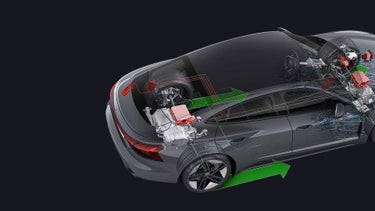
Audi e-quattro distributes torque from the electric motors to the wheels in around 30 milliseconds, providing a remarkable level of control.
- The ultimate power move
Available on e-tron GT models, e-torque vectoring plus quickly distributes torque on the rear axle to the wheel that needs it most, making for excellent traction and improved agility.
- More driving, less charging
Under normal driving conditions, e-quattro delivers power to a single axle, helping reduce energy consumption.
Has saltado el carrusel, continúa con el contenido principal
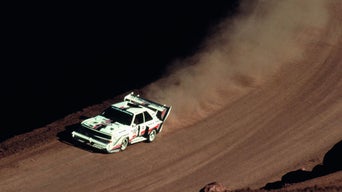
quattro in the world of motorsport


View all models
Experience Audi today.

Audi lighting
A brighter way forward.

quattro merch
Represent a legend.

View inventory
Experience quattro first hand.
Turn a new corner


FAQs
quattro is the all-wheel drive system developed by Audi that distributes power to all four wheels to improve traction, stability, and control. It automatically adjusts torque between the front and rear axles based on driving conditions, helping maintain grip in both everyday and performance driving scenarios.
Audi quattro systems use a combination of mechanical and electronic components to manage power distribution. Depending on the model, this may include: A center differential that splits torque between axles Electronic controls that react to wheel slip Torque vectoring systems that enhance cornering stability The system continuously adapts in real time to optimize traction and handling.
Most traditional quattro systems are full-time all-wheel drive, meaning all four wheels are engaged continuously.Some newer systems, such as ultra variants, can temporarily decouple the rear axle under light driving conditions to improve efficiency, then re-engage instantly when needed.
The key difference is efficiency versus constant engagement: quattro (traditional): all-wheel drive with continuous torque distribution quattro ultra: Actively switches between two-wheel and all-wheel drive to reduce fuel consumption Both systems are designed to maintain traction, but quattro ultra prioritizes efficiency in everyday driving.
quattro is available across the entire Audi lineup, often coming standard on premium models.
Yes. quattro is widely regarded as one of the most effective all-wheel drive systems for winter conditions. By distributing power to the wheels with the most grip, it helps improve: Acceleration on slippery surfaces Stability in corners Overall driver confidence Winter tires are still recommended for optimal performance.
quattro enhances both. Traction: Improves grip in rain, snow, and low-traction conditions Performance: Enables better acceleration and cornering stability, especially in high-performance models In S and RS models, advanced quattro systems can also include sport differentials for more dynamic handling.
All-wheel drive systems typically use more energy than two-wheel drive. However, newer systems like quattro ultra are designed to reduce this impact by disengaging components when full traction is not required, helping improve overall efficiency.
For many drivers, yes—especially in regions with variable weather or demanding road conditions. quattro offers: Increased confidence in poor weather Enhanced stability and safety Improved performance characteristics The value depends on driving environment and priorities, but it is one of Audi’s defining technologies.
quattro stands out for its integration with vehicle dynamics and performance engineering. Unlike basic AWD systems, it is designed not just for traction but also for: Balanced handling Predictable power delivery Performance driving capability This makes it a core part of Audi’s identity across both everyday and high-performance vehicles.
2.3e engine with 136hp
degrees
80% slope grade
feet